Our Location
No.503 Xingguo Road, Yuhang Economic and
Technological Development Zone, Hangzhou

No.503 Xingguo Road, Yuhang Economic and
Technological Development Zone, Hangzhou

Understand the difference between IEC 62053 meter requirements and IEC 62057 test equipment procedures for reliable energy meter compliance testing.
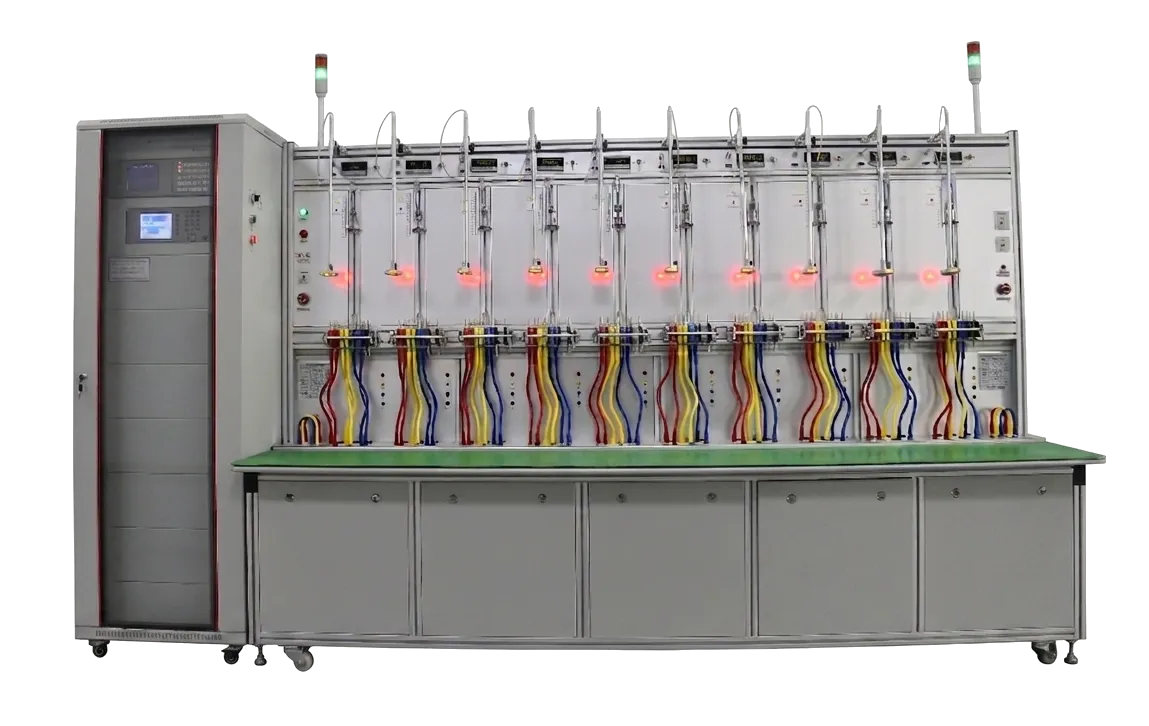
IEC 62053 and IEC 62057 are often mentioned together in energy meter testing programs, but they serve different purposes. Understanding the difference helps manufacturers, utilities, and laboratories build a test plan that covers both the meter and the equipment used to evaluate it.
IEC 62053 is part of the IEC 62052 and IEC 62053 family for electricity metering equipment. It defines particular requirements for static meters used to measure active, reactive, or apparent energy. The standard family covers accuracy, influence quantities, electrical requirements, type tests, and marking requirements for different meter classes.
In a test plan, IEC 62052 and IEC 62053 define what the meter must achieve and the conditions under which compliance is evaluated. The exact parts and editions depend on meter type, voltage and current range, connection method, and target market.
IEC 62057 addresses test equipment, techniques, and procedures for electrical energy meters. Its purpose is to define how meters can be tested reliably and repeatably using suitable equipment and methods.
This is where a test bench becomes central. The bench provides controlled voltage and current sources, a traceable reference measurement, meter positions, pulse acquisition, communication interfaces, and software that compares meter output with the reference value.
A useful way to understand the relationship is:
A compliant meter can still produce unreliable conclusions if the test equipment is unstable or the procedure is poorly controlled. That is why reference accuracy, measurement uncertainty, traceability, and repeatability are as important as the meter’s declared accuracy class.
When selecting a test bench, ask how it supports the applicable IEC 62053 test points and IEC 62057 procedures. Confirm the voltage and current range, source stability, reference accuracy, pulse measurement, communication support, environmental monitoring, and reporting functions.
For production testing, review how the system handles high meter volumes, automatic loading, barcode identification, sorting, retests, and data upload. A three-phase smart energy meter test bench may be appropriate for mixed three-phase production, while a fully automatic calibration line is designed for high-volume workflows.
Modern smart meters often use DLMS/COSEM for communication. IEC 62053 and IEC 62057 focus on metering and test requirements, while DLMS/COSEM defines communication objects and services. A complete test system may need to verify both energy accuracy and communication functions such as registration, tariff switching, event logs, and load profiles.
No. They cover different parts of the testing process. IEC 62052 and IEC 62053 define meter requirements and test conditions; IEC 62057 addresses test equipment, techniques, and procedures.
Many accuracy and verification tests require a traceable reference measurement. The exact requirement depends on the test method and meter standard.
Often yes, if the source, reference system, meter fixtures, and software support the required measurement modes and test points.
For a test configuration based on your meter type and target standards, review our energy meter testing equipment or contact us.
A practical test plan should identify the applicable standard parts, meter class, test conditions, acceptance limits, reference equipment, environmental conditions, and reporting requirements. Each test should have a unique identifier so results can be traced back to the procedure and calibration records.
The plan should also define how firmware versions, meter serial numbers, software versions, and test conditions are controlled. This makes later comparisons meaningful and avoids unexplained changes between test campaigns.
